 Surfaces & materials
Ferrofluid pools & field lines
Liquid metal under the cards of a board, drawn by the GPU from a few numbers a card.
0.20 GPU · 0.19 CPU ms
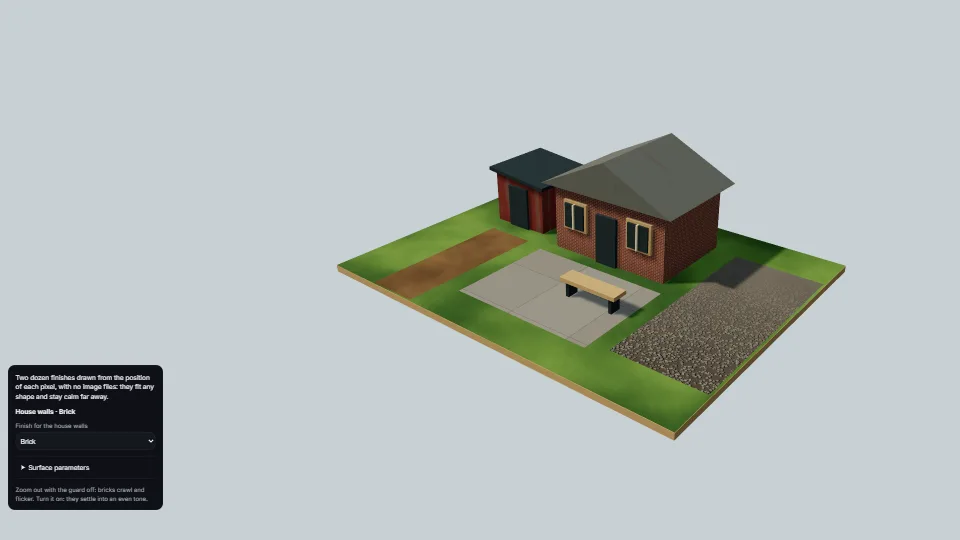
Twenty-four ground, wall and roof finishes evaluated directly from world coordinates: brick, timber, corrugated metal, concrete, grass, gravel, snow, lava and more.
Pixel footprints soften joints toward their average coverage and fade fine relief before it aliases. A plain-data catalogue supplies colours, dimensions, hints and recommended values; live edits update uniforms without a bake or shader rebuild.
Measured 19 November 2026 on RTX 4060 Laptop, 13th Gen Intel(R) Core(TM) i9-13900H, Chrome 157, 1920×1080 at 1×. 600 frames × 3 rounds, median kept (rounds ranged GPU 0.39–0.41, CPU 0.28–0.28 ms). What ran: Default whole yard: brick house, corrugated roof, timber shed, grass, gravel, concrete slabs and dirt, with a fitted sun shadow and hemisphere sky light. Shimmer guard on, no zoom or parameter edits. No textures, compute or bake; idle frames are held outside benchmarks. Other catalogue finishes have different fragment costs. Phones: tiers are being measured next.
Frames run back to back, each starting once the GPU has finished the last, so frame times show the work itself. They have a floor of about 4–5 ms from the browser’s own scheduling: GPU and CPU ms stay the measure of cost.
install("world-surfaces")Your coding agent reads its pitfalls and installs it through the library’s MCP server. Set it upFrom HaTac. Adapted from published work, named below.
Hannes Andersson: Source surface graphs, catalogue, analytic relief and footprint filtering.
Morten S. Mikkelsen: Surface-gradient bump mapping from screen-space height derivatives, as described in the source.
Surfaces & materialsLiquid metal under the cards of a board, drawn by the GPU from a few numbers a card.
 Surfaces & materials
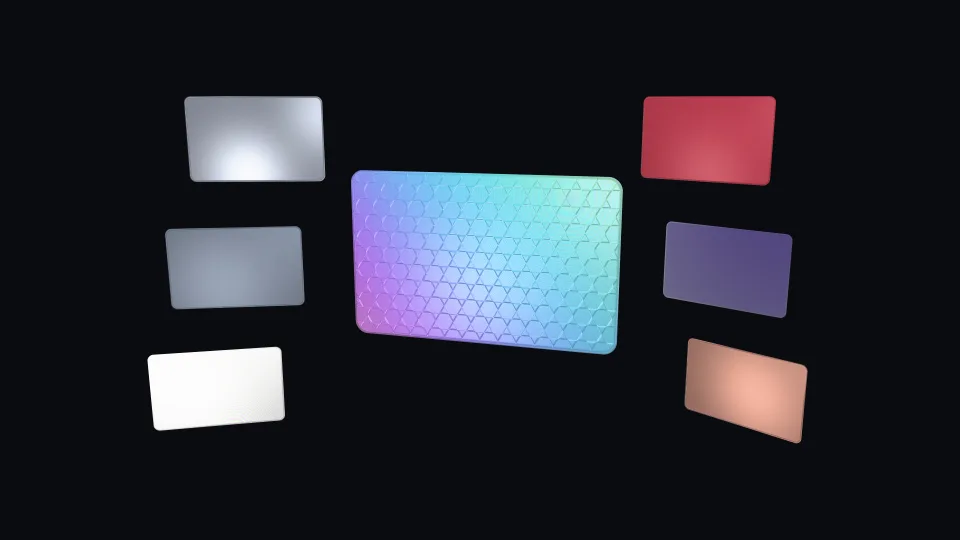
Real finishes on cards, tiles and panels from one lit surface and no textures.
 Surfaces & materials
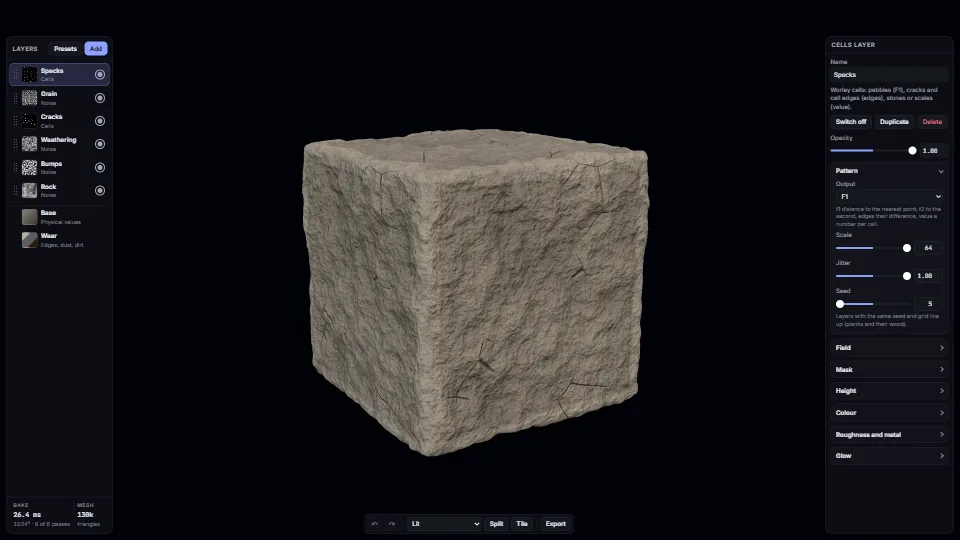
Material presets by name: material(‘weathered-wood’, { style }) gives one of 39 at their real-world size, at once, and one switch turns every material it made…
 Surfaces & materials
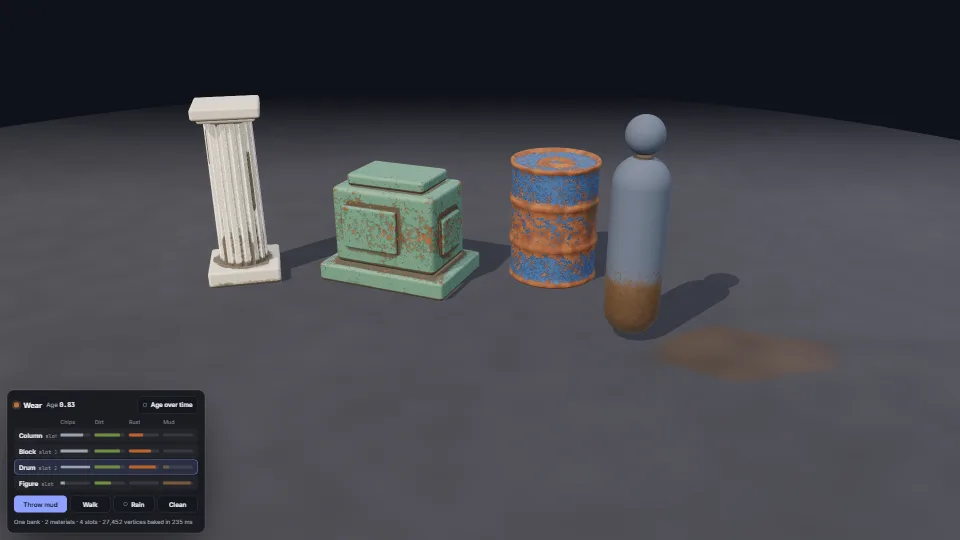
Paint that wears through on edges and corners, dirt and rust that gather in crevices, and grime the world leaves.