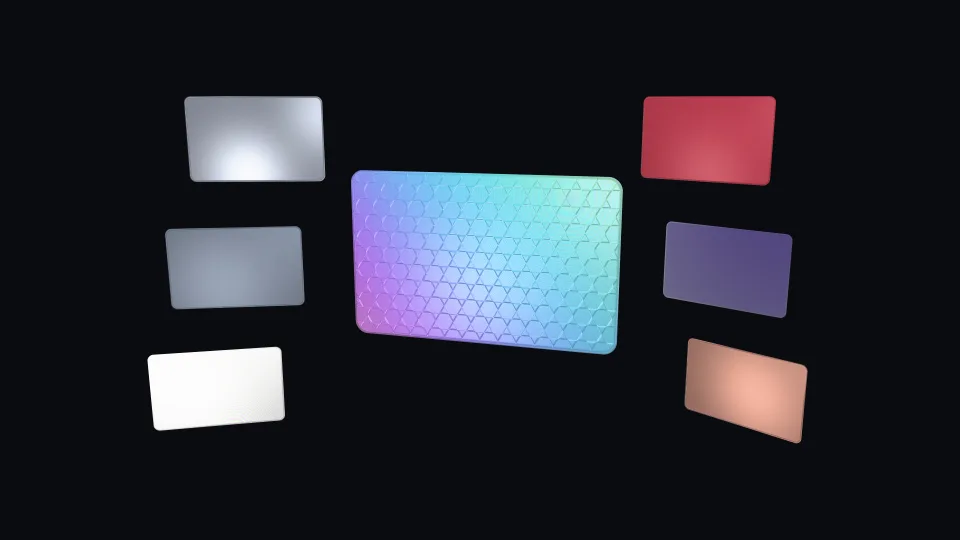
 Surfaces & materials
Ferrofluid pools & field lines
0.20 GPU · 0.19 CPU ms
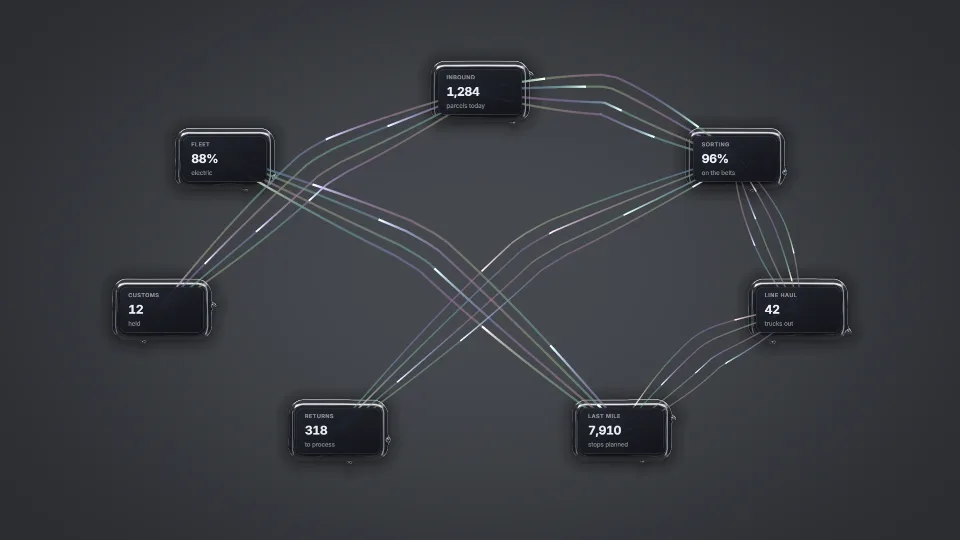
Still
The live demo starts when it’s in view.Drag the cards together to fuse their pools · hover a card to raise its spikes
Liquid metal under every card: pools that fuse as cards come close, beads and a living ripple, Rosensweig spikes rising toward the pointer, iron filings and…
What it costs a frame
0.20 ms
0.19 ms
- GPU
- 0.20 ms
- CPU, median
- 0.19 ms
- CPU, 95th pct
- 0.34 ms
- Draw calls
- 6
- Weight
- Light
Measured 3 November 2026 on RTX 4060 Laptop, 13th Gen Intel(R) Core(TM) i9-13900H, Chrome 156, 1920×1080 at 1×. 600 frames × 3 rounds, median kept. What ran: Measured at rest with the pointer off the board: the pools, field lines and their living surface; the spikes and filings add a little while a card is hovered. Phones: tiers are being measured next.
| Machine | GPU ms | CPU ms | CPU p95 |
|---|---|---|---|
| RTX 4060 Laptop · 13th Gen Intel(R) Core(TM) i9-13900Hreference · measuring tool | 0.20 | 0.19 | 0.34 |
| apple · Apple A19 Proin a browser tab · 16 November 2026 | 1.31 | 0.22 | 0.44 |
| Intel Arc 140V (Xe2-LPG) · Intel Core Ultra 7 258Vin a browser tab · 15 November 2026 | 1.70 | 0.49 | 0.88 |
Bars against one 16.7 ms frame. A browser-tab run is timed in a visible tab without the tool’s scripted input, so read it as close, not exact.
How steadily it runs on Intel Arc 140V (Xe2-LPG) · Intel Core Ultra 7 258V · in a browser tab
- Typical frame ?
- 6.91 ms
- 1% low ?
- 102 fps
- Varies by ?
- ±1.27 ms
All metricsIntel Arc 140V (Xe2-LPG) · Intel Core Ultra 7 258V · in a browser tab
Frames run back to back, each starting once the GPU has finished the last, so frame times show the work itself. They have a floor of about 4–5 ms from the browser’s own scheduling: GPU and CPU ms stay the measure of cost.
Frames
- Median (p50) ?
- 6.91 ms
- p95 ?
- 9.06 ms
- p99 ?
- 9.63 ms
- Slowest ?
- 10.80 ms
- Mean ?
- 6.96 ms
- Standard deviation ?
- 1.27 ms
- 1% low ?
- 102 fps
- 0.1% low ?
- 93 fps
- Hitches ?
- 0 of 600
- Over budget ?
- 0 of 600
Main thread
- Long tasks ?
- 0
- Long frames ?
- 0
- Event-loop delay ?
- 0.1 / 1.0 / 1.1 ms
Input
- Interactions ?
- 79
- Input to paint ?
- 4.8 ms, worst 8.6
- Longest handler ?
- 0.1 ms
Memory
- JavaScript heap ?
- 74.9 → 74.2 MB
- Growth ?
- -0.73 MB
What it needs
- Renders with
- WebGPUNeeds WebGPU: current Chrome and Edge, Safari 26+, Firefox 141+ on Windows.
- Your browser
- Checking…Looking for WebGPU
- Depends on
- three.js 0.187.0No other packages
What it’s for
- Canvas and whiteboard apps
- Dashboards with linked cards
- Node graphs
- Hover states with character
- Product hero sections
Pitfalls, in brief
- Each pixel is drawn by the pool whose card is nearest (the others discard it), so fused pools are drawn once; a pool knows at most four neighbours, so a dense cluster can show seams.
- setPools and setRoutes compare a key of their input and only upload on change: call them every frame freely, but do not mutate the arrays in place expecting an upload.
- Board units are CSS pixels here: pass unit (board units per CSS pixel) and pixels (device pixels per unit) to update, or the fine detail melts or sparkles at zoom.
- The camera is orthographic with y down (top < bottom), which mirrors the projection: the materials are double-sided for that reason.
- update() returns whether it still moves: a render-on-demand app should ask for another frame only while it returns true (or while the surface is alive).
5 pitfalls in full, the hook-up guide, the module source and its tests come with the part.
Where it comes from
From SpaciousPro. Fully custom code.
Inigo Quilez, 2D distance and gradient functions: The rounded box’s distance and gradient follow his sdgBox formula (re-written in TSL).
Rosensweig instability: The spikes imitate the peaks a ferrofluid forms in a magnetic field.
Near it in the frame
Surfaces & materials Surfaces & materials
 Surfaces & materials
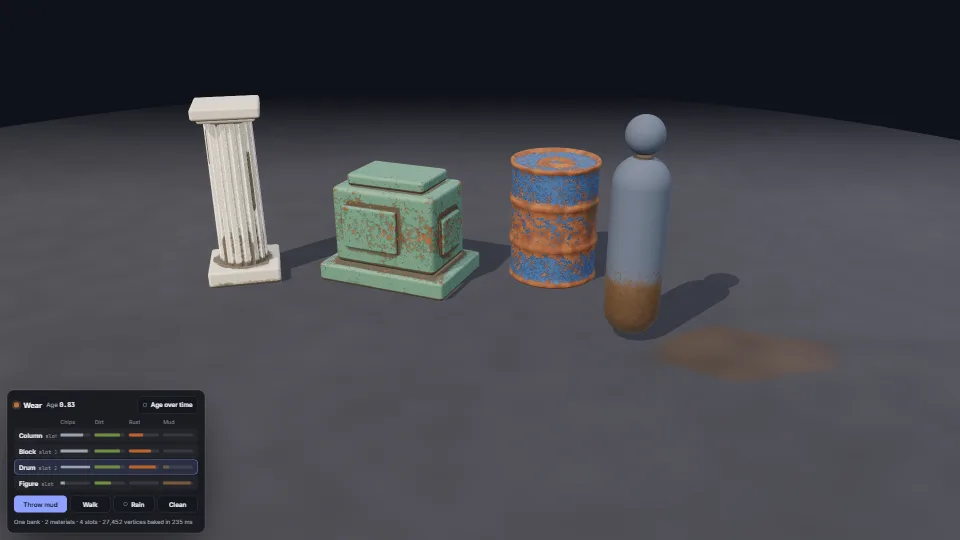
Wear and grime
Paint that wears through on edges and corners, dirt and rust that gather in crevices, and grime the world leaves.
0.94 GPU · 0.45 CPU ms
 Surfaces & materials
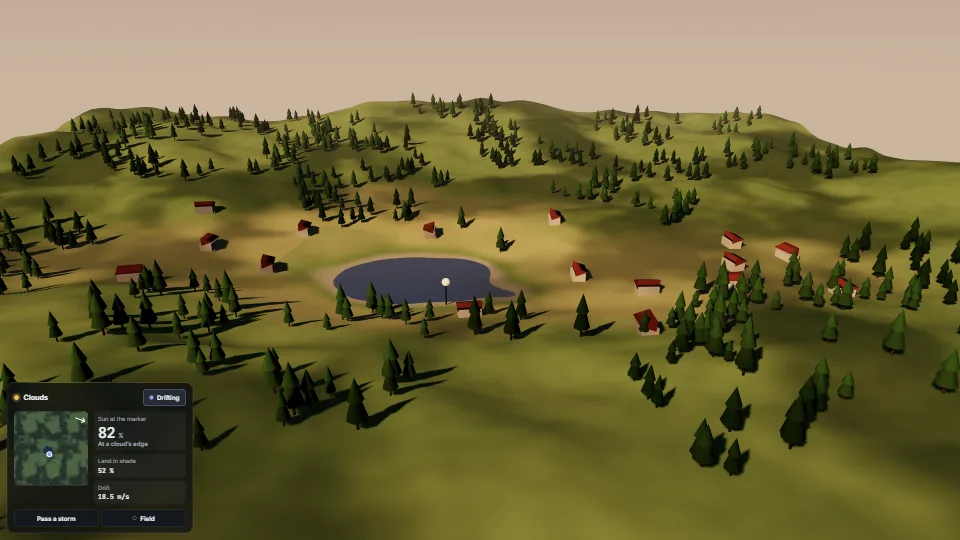
Cloud shadows
Soft shade drifting over the land with the wind, on everything the sun lights.
1.19 GPU · 0.26 CPU ms