 Techniques
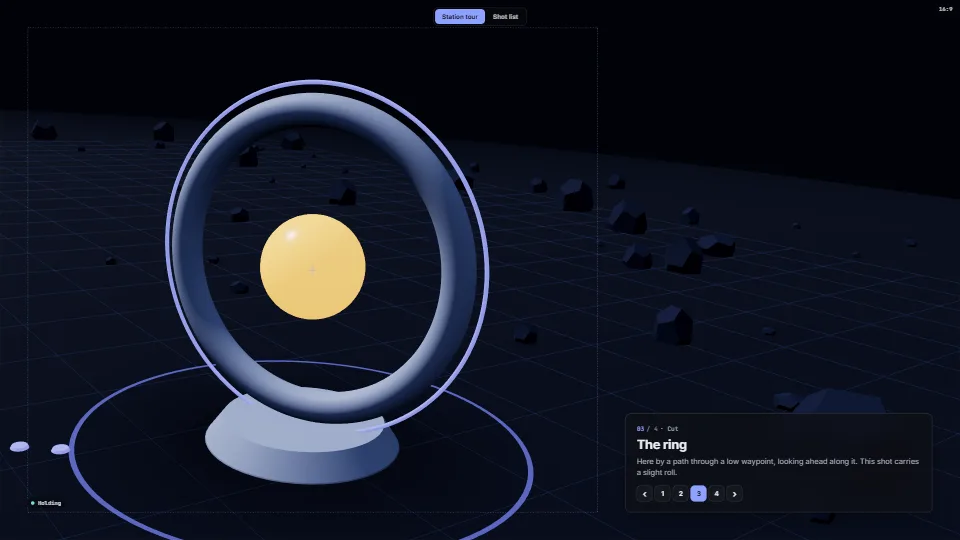
Camera director
Cinematic camera moves between stations in a 3D world, with shots as data.
0.28 GPU · 0.33 CPU ms
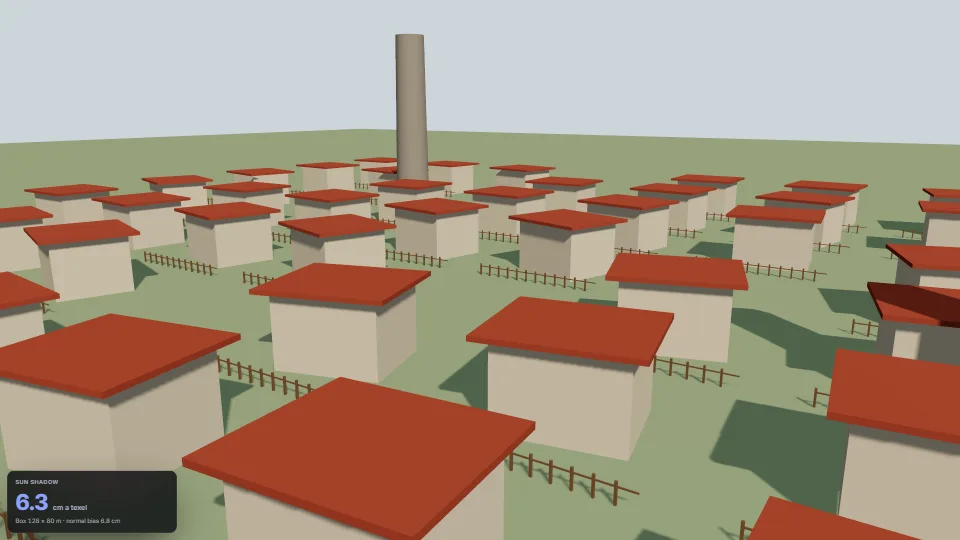
One sun’s shadow that stays crisp and still.
One sun’s shadow that stays crisp and still: the shadow map is refitted every frame to the ground the camera sees (at three heights, for relief and tall buildings, up to a distance you set), its size in fixed steps and its centre snapped to whole texels in the light’s plane, so an edge fixed in the world never shimmers as the camera moves; edges are filtered by a fixed 3×3 tent in texel space (three r185’s PCFSoft, which r186 removed from the WebGPU renderer, where asking for it falls back to three’s PCF and its taps rotated by screen noise: dithered edges that crawl as the view pans). The depth bias holds about 4 cm whatever the box’s depth, the normal bias grows as the sun drops (no acne stripes at dawn), and a receiver fix measures it along the geometric normal (no dark strip moving along wall bases under normal maps). From a game that tuned it at length; a fixed box over a whole scene spends the map on empty country and turns edges to stairs.
Measured 18 November 2026 on RTX 4060 Laptop, 13th Gen Intel(R) Core(TM) i9-13900H, Chrome 157, 1920×1080 at 1×. 600 frames × 3 rounds, median kept (rounds ranged GPU 0.22–0.24, CPU 0.29–0.36 ms). What ran: A block of 76 small houses with overhanging roofs and fences, three towers, one 2,048-px sun shadow fitted to the view each frame and filtered by the tent, the camera turning slowly round the block. Phones: tiers are being measured next.
Frames run back to back, each starting once the GPU has finished the last, so frame times show the work itself. They have a floor of about 4–5 ms from the browser’s own scheduling: GPU and CPU ms stay the measure of cost.
install("sun-shadow")Your coding agent reads its pitfalls and installs it through the library’s MCP server. Set it upFrom HaTac. Adapted from published work, named below.
three.js (MIT): the tent filter is r185’s PCFSoftShadowFilter, ported to TSL with four gather-compares
TechniquesCinematic camera moves between stations in a 3D world, with shots as data.
 Techniques
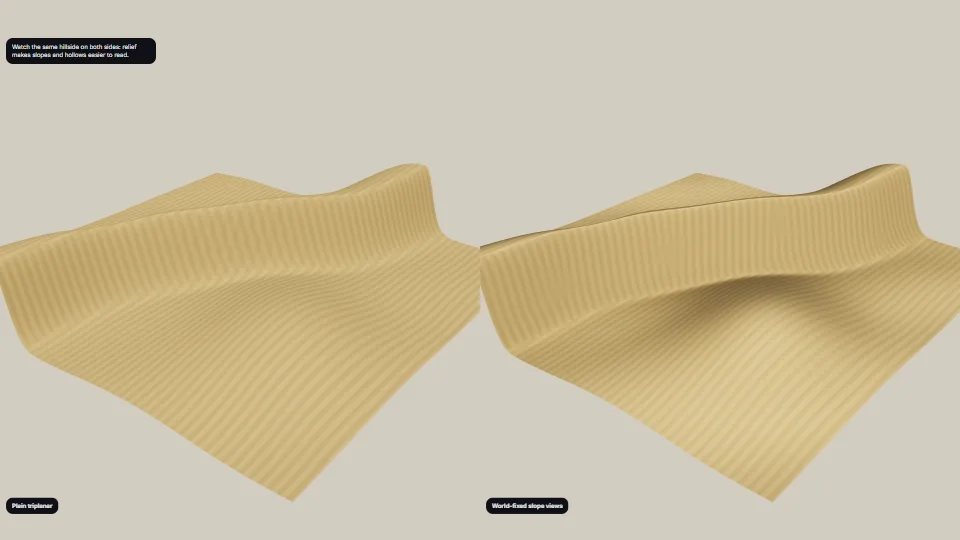
Make the shape of bright ground readable: lengthen its normal’s tilt for lighting, distinguish lee and windward faces, and bake local horizon occlusion into hollows.
 Techniques
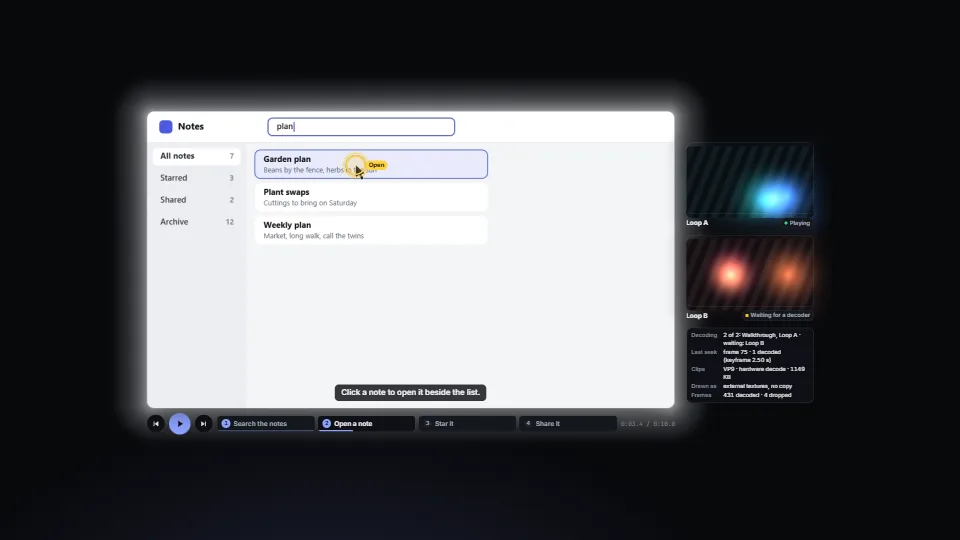
Pre-recorded video inside a WebGPU scene and in the page, stage-grade.
 Techniques
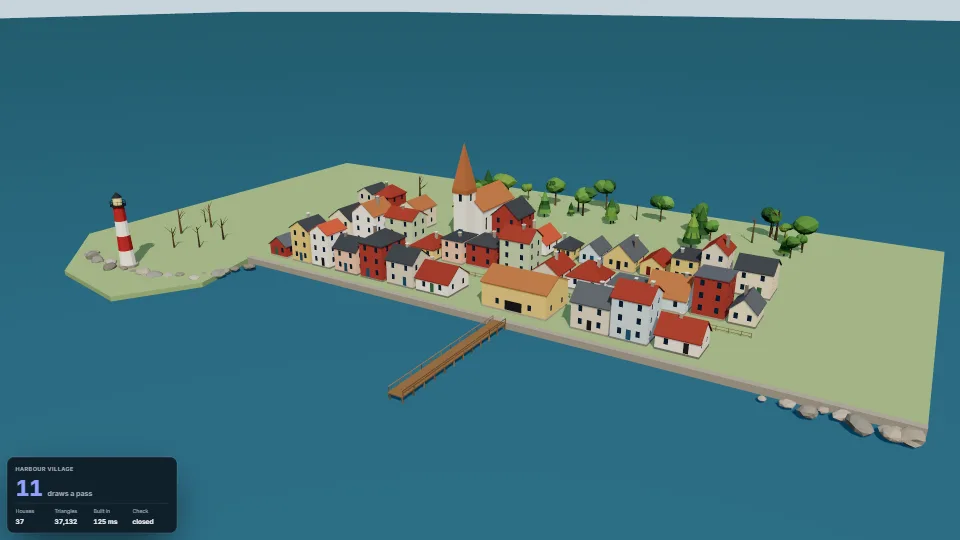
Coastal and village set dressing in one faceted low-poly style, each prop from a few numbers and a seed.