 Systems & tooling
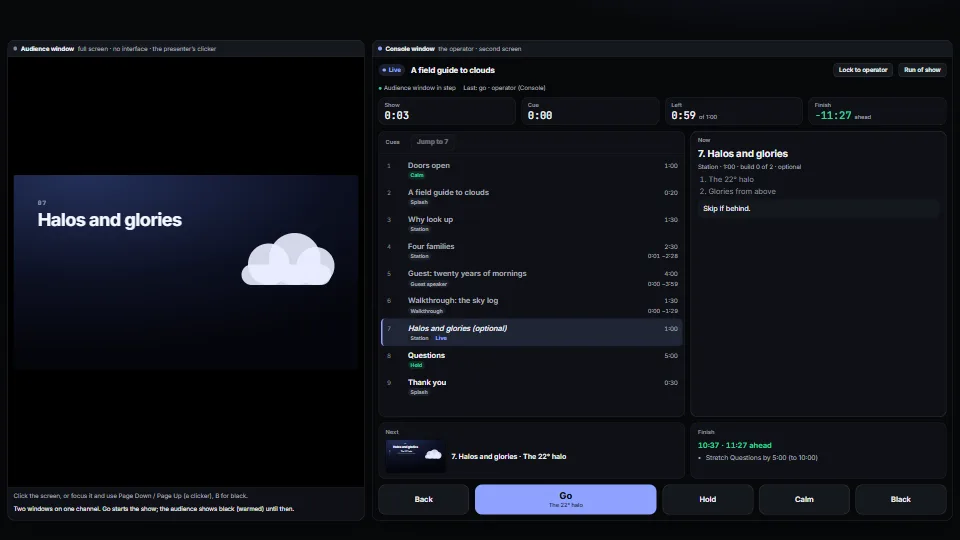
Cue engine and operator console
Runs a live presentation from a cue list: go, back, jump, hold, calm and black, with builds inside a cue, from any clicker, the keyboard or the console.
<0.01 CPU ms
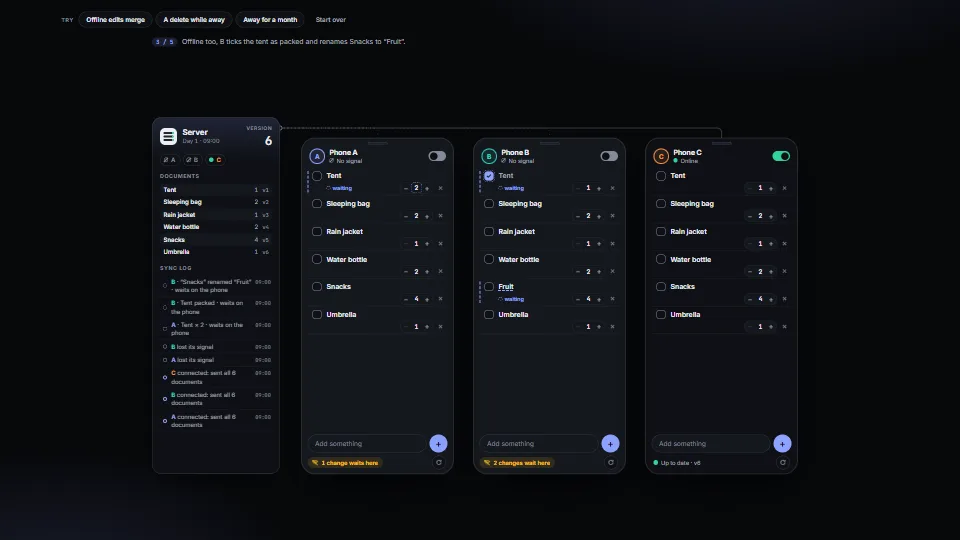
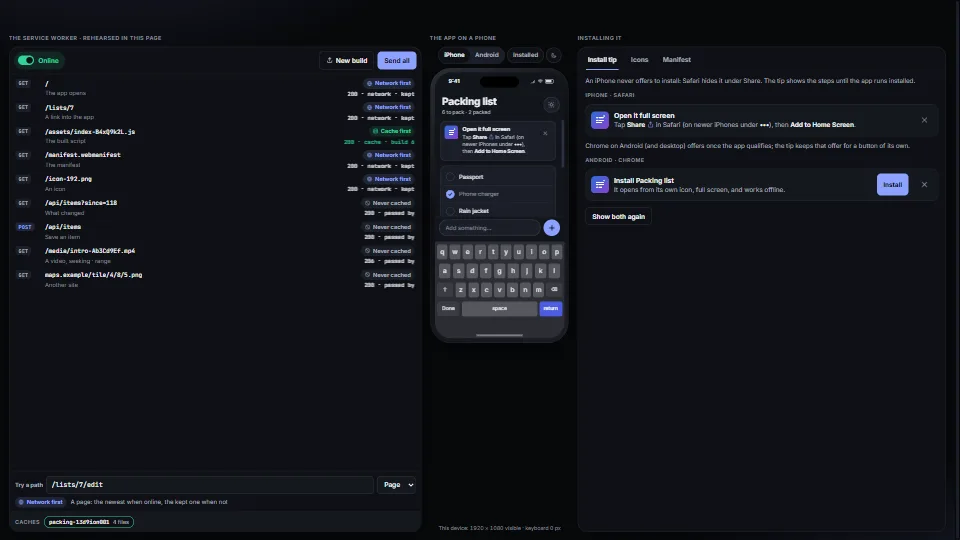
Shared lists that keep working with no signal.
Measured 11 November 2026 on 13th Gen Intel(R) Core(TM) i9-13900H, Chrome 157, 1920×1080 at 1×. 600 frames × 3 rounds, median kept. What ran: Measured with the demo running its three scenarios in a loop at a 60 ms network delay: phones going offline and back, edits queued and merged, a delete reaching a phone that was away, a month skipped and a full resend. The server, the network and three sync engines all run in the page; the phones re-render on every change. Nothing runs between changes outside the bench. Phones: tiers are being measured next.
| Machine | GPU ms | CPU ms | CPU p95 |
|---|---|---|---|
| unknown GPU · 13th Gen Intel(R) Core(TM) i9-13900Hreference · measuring tool | not timed | <0.01 | <0.01 |
| apple · Apple A19 Proin a browser tab · 16 November 2026 | not timed | <0.01 | 0.02 |
| Intel Arc 140V (Xe2-LPG) · Intel Core Ultra 7 258Vin a browser tab · 15 November 2026 | not timed | <0.01 | <0.01 |
Bars against one 16.7 ms frame. A browser-tab run is timed in a visible tab without the tool’s scripted input, so read it as close, not exact.
From My other apps. Fully custom code.
Cloudflare Durable Objects: WebSocket hibernation and SQLite storage: acceptWebSocket, socket attachments, auto-responses and ctx.storage.sql as documented; the adapter is the app’s own code
WAI-ARIA Authoring Practices Guide (W3C): the Switch pattern (a checkbox with role switch) for each phone’s network, and announcements through a polite live region, in the demo
Systems & toolingRuns a live presentation from a cue list: go, back, jump, hold, calm and black, with builds inside a cue, from any clicker, the keyboard or the console.
 Systems & tooling
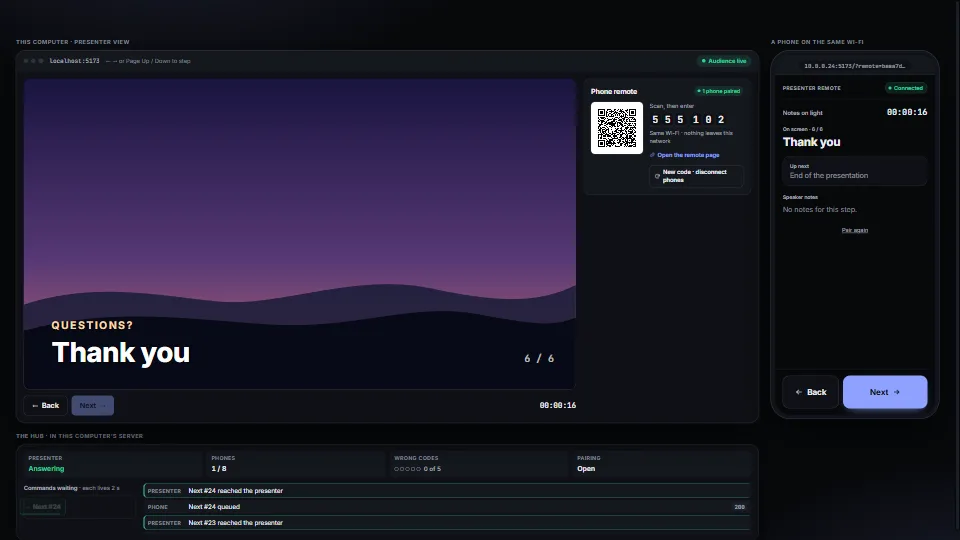
A phone on the same Wi-Fi steps a presentation, with no cloud and no app: scan a QR code, type a six-digit code, and Next and Back go to the presenting machine.
 Systems & tooling
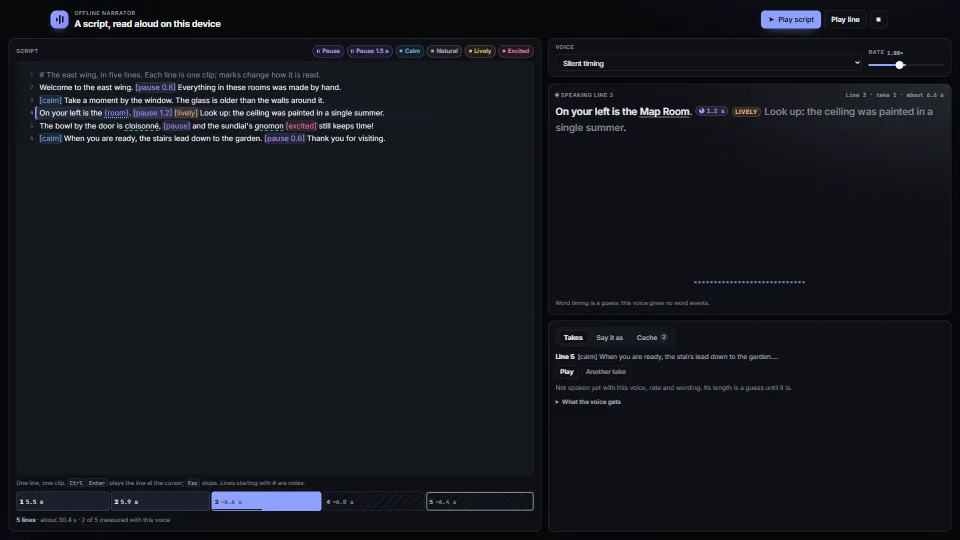
Narration from a script with no cloud: lines with pauses and tone marks, a pronunciation list and {values}, parsed into pieces that keep their place in the…
 Systems & tooling