 Simulation
Print slicer and motion planner
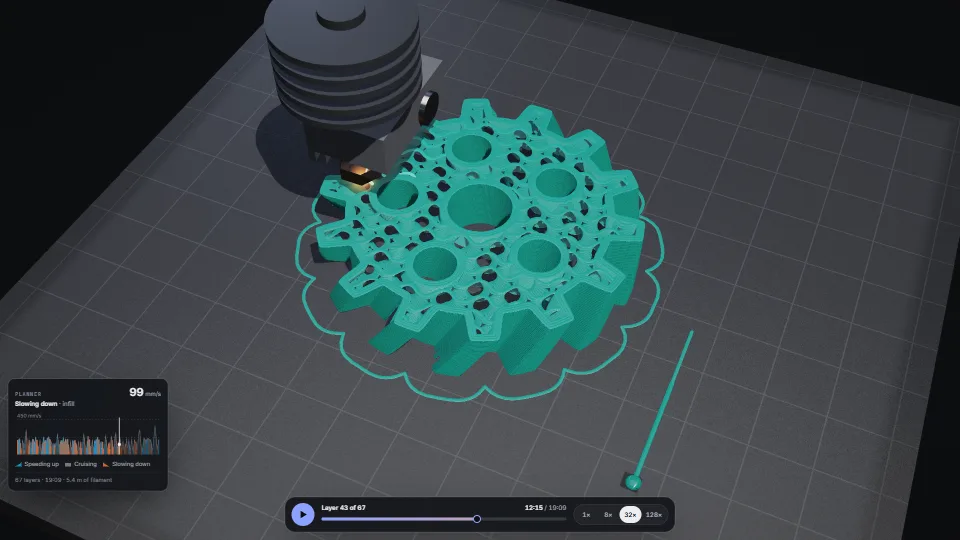
A 3D printer’s slicer and motion planner, with the print drawn as it is laid.
5.89 GPU · 0.48 CPU ms
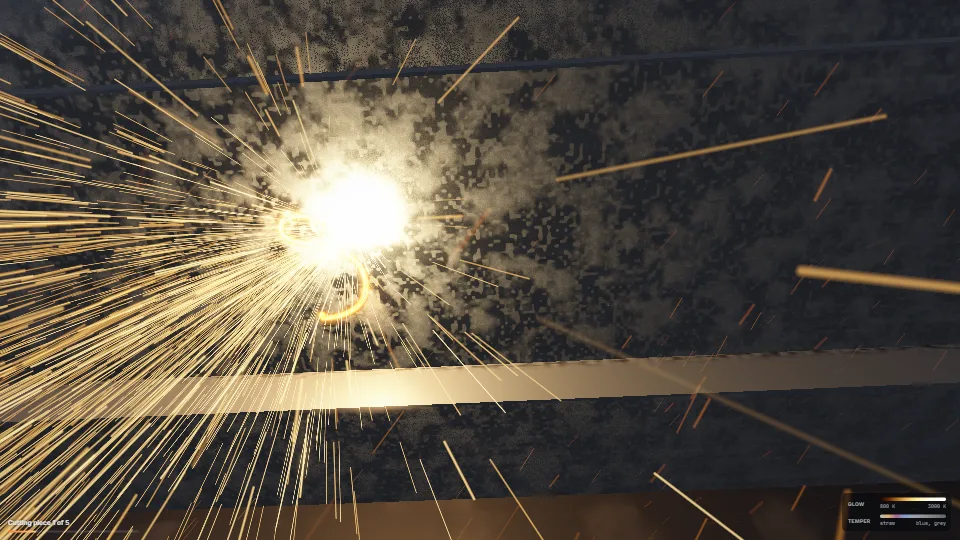
A CNC laser cutting any shape out of thick steel.
Measured 11 November 2026 on 13th Gen Intel(R) Core(TM) i9-13900H, Chrome 157, 1920×1080 at 1×. 600 frames × 3 rounds, median kept. What ran: Measured cutting the default word over and over from the tray, at the defaults: 128k spark slots stepped and drawn, the shop ray-traced at half size with extra rays on the cut’s edges, a quarter-size bloom; timed with its own timestamp queries. Phones: tiers are being measured next.
| Machine | GPU ms | CPU ms | CPU p95 |
|---|---|---|---|
| unknown GPU · 13th Gen Intel(R) Core(TM) i9-13900Hreference · measuring tool | 5.97 | 0.20 | 0.33 |
| apple · Apple A19 Proin a browser tab · 16 November 2026 | 7.85 | 0.80 | 1.04 |
| Intel Arc 140V (Xe2-LPG) · Intel Core Ultra 7 258Vin a browser tab · 15 November 2026 | 3.21 | 0.44 | 0.65 |
Bars against one 16.7 ms frame. A browser-tab run is timed in a visible tab without the tool’s scripted input, so read it as close, not exact.
From SpaciousPro. Fully custom code.
Guodong Rong & Tiow-Seng Tan, Jump Flooding in GPU with Applications to Voronoi Diagram and Distance Transform (2006): The distance field is their jump flood, with their two extra passes at strides 2 and 1 (JFA+2).
Mark Jarzynski & Marc Olano, Hash Functions for GPU Rendering (2020): The sparks’ randoms and the surface noise use their PCG hash; it replaces the original’s float hashes.
Max Planck, black-body radiation: The glow’s colour is Planck’s law at three wavelengths; the strength curve is the source’s own.
Walter, Marschner, Li & Torrance, microfacet BRDF (2007), with Schlick’s Fresnel: The metal’s highlights are the standard GGX form.
SimulationA 3D printer’s slicer and motion planner, with the print drawn as it is laid.
 Simulation
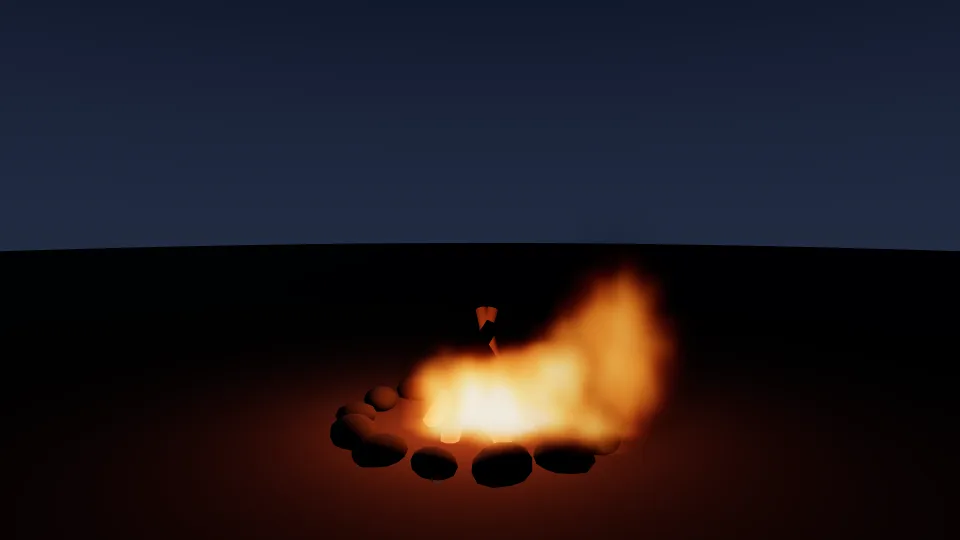
A box of air over burning ground stepped on the GPU every frame (advection, buoyancy, curl, a pressure solve) and drawn by marching each pixel’s ray through it.
 Simulation
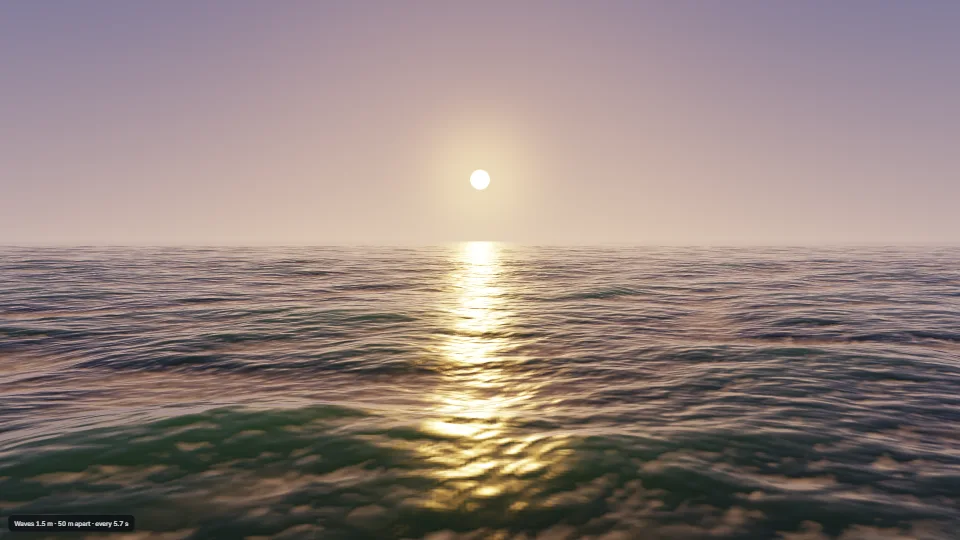
An open sea from a wind-wave spectrum (Tessendorf), summed back to heights, choppy sideways push and folds by a Stockham FFT on the GPU every frame, into…
 Simulation
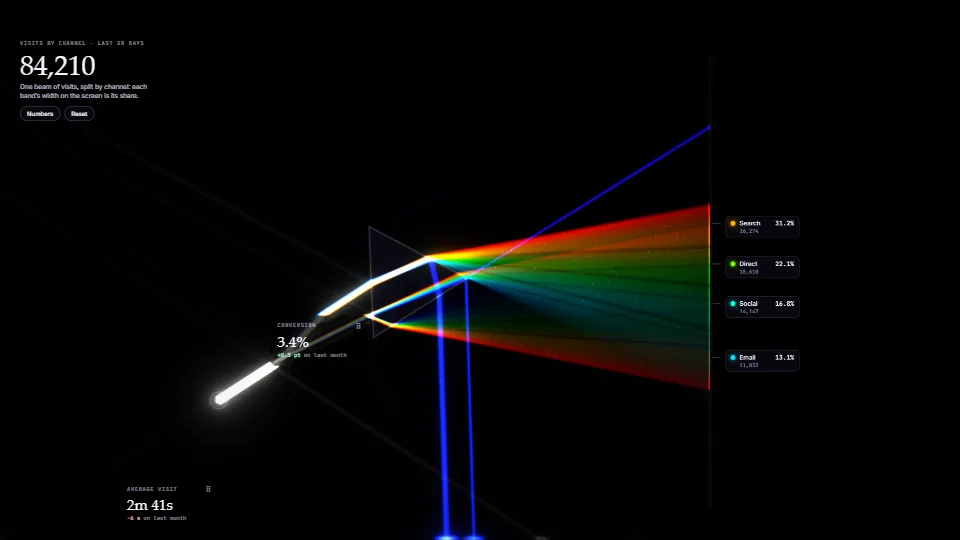
Spectral 2D light transport in WebGPU compute.