 Techniques
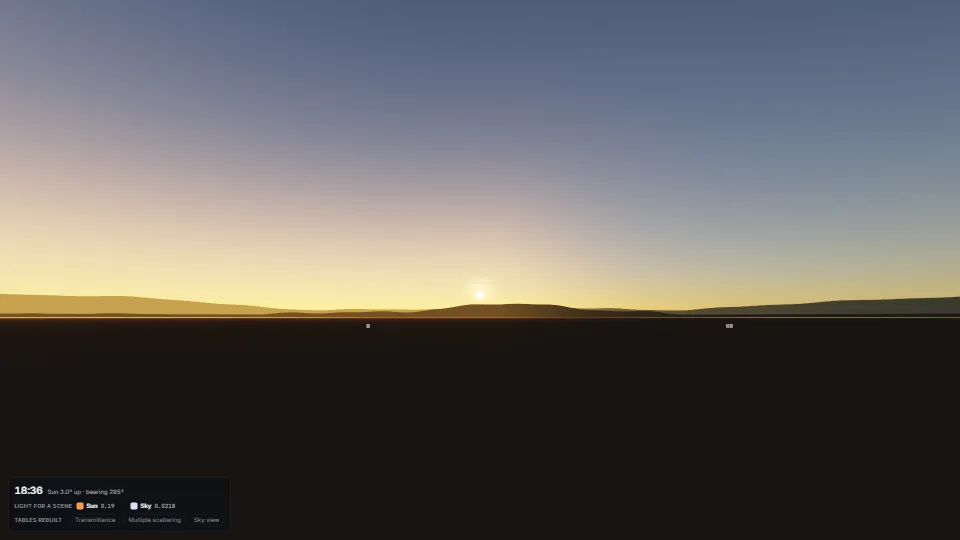
Physical sky
A sky worked out from the air itself on WebGPU (the same passes on WebGL2 where it is missing).
3.37 GPU · 0.36 CPU ms
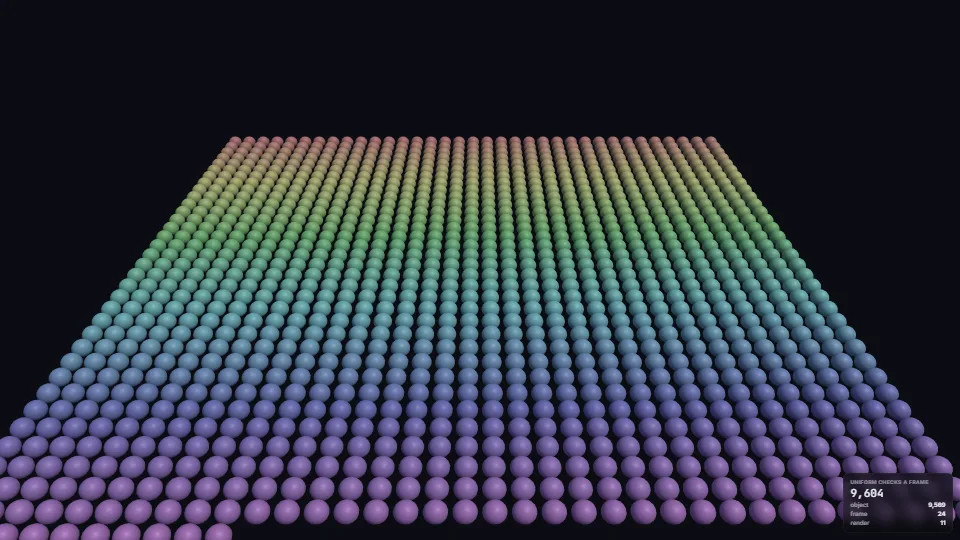
Global values (time, wind, sun, fog) in three’s frame group instead of every object’s: checked once a render instead of once per drawn object and pass.
Measured 3 November 2026 on RTX 4060 Laptop, 13th Gen Intel(R) Core(TM) i9-13900H, Chrome 156, 1920×1080 at 1×. 600 frames × 3 rounds, median kept. What ran: 1,200 objects, each with its own material reading 24 global uniforms, measured with the globals in the frame group. The same scene with plain uniform()s, measured right after on the same machine: CPU 7.5–10.4 ms a frame against 4.8–6.9 ms shared, and GPU 1.2 ms against 0.7 ms (fewer uniform uploads). The badge is the 1,200 draws’ cost, not the technique’s. Phones: tiers are being measured next.
| Machine | GPU ms | CPU ms | CPU p95 |
|---|---|---|---|
| RTX 4060 Laptop · 13th Gen Intel(R) Core(TM) i9-13900Hreference · measuring tool | 1.58 | 2.48 | 4.94 |
| apple · Apple A19 Proin a browser tab · 16 November 2026 | 7.94 | 3.74 | 4.12 |
| Intel Arc 140V (Xe2-LPG) · Intel Core Ultra 7 258Vin a browser tab · 15 November 2026 | 1.83 | 5.53 | 6.15 |
Bars against one 16.7 ms frame. A browser-tab run is timed in a visible tab without the tool’s scripted input, so read it as close, not exact.
From HaTac. Fully custom code.
TechniquesA sky worked out from the air itself on WebGPU (the same passes on WebGL2 where it is missing).
 Techniques
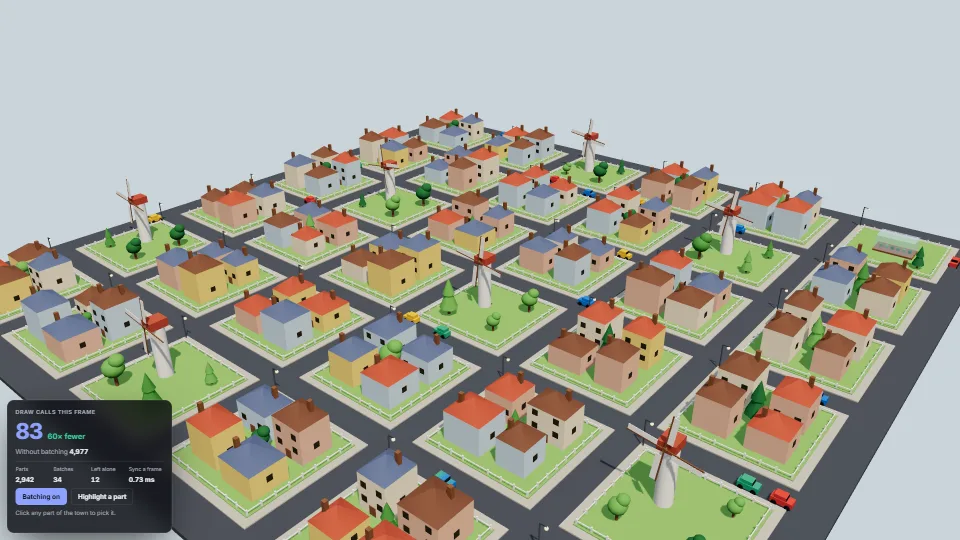
Every plain opaque mesh in a scene is drawn through shared InstancedMeshes, one per geometry, material and shadow flags, with no change to the code that builds the scene.
 Techniques
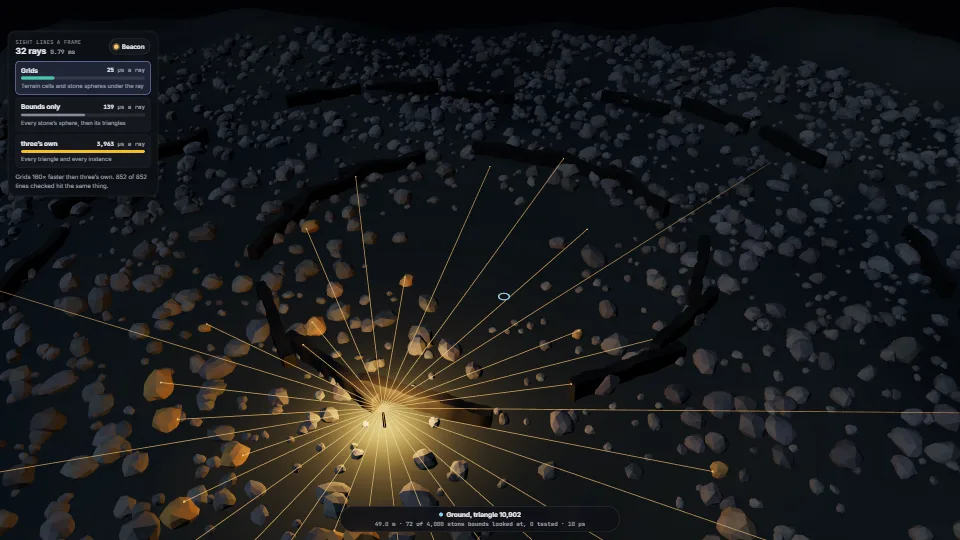
Picking and line of sight that stay cheap when the scene is big.
 Techniques