 Particles
Fireworks with real colour chemistry
Shells launched by kind and colour to burst where you point.
6.54 GPU · 0.13 CPU ms
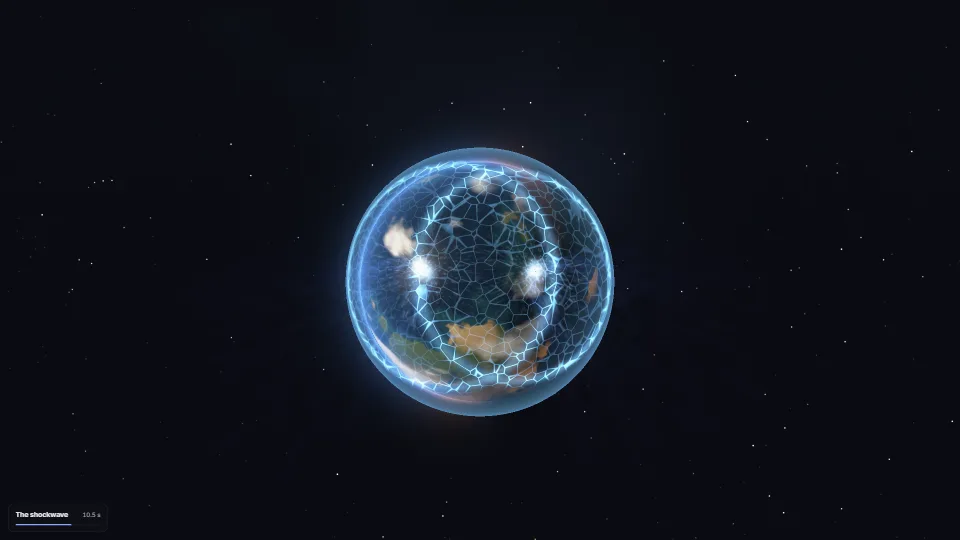
A title moment for a stage or a launch: the camera races in at lightspeed behind falling lights, the stars streaking past, brakes hard into their trails and…
Measured 11 November 2026 on 13th Gen Intel(R) Core(TM) i9-13900H, Chrome 157, 1920×1080 at 1×. 600 frames × 3 rounds, median kept. What ran: The whole 16 s sequence played over and over at medium quality (12k stars, 2 × 2,600 trail particles, 2 × 700 sparks): one full-screen ray-traced pass (world, barrier cells, shockwaves, word), the stars as streaks and the particles additive, one composite pass; timed with its own timestamp queries. Phones: tiers are being measured next.
| Machine | GPU ms | CPU ms | CPU p95 |
|---|---|---|---|
| unknown GPU · 13th Gen Intel(R) Core(TM) i9-13900Hreference · measuring tool | 5.56 | 0.14 | 0.24 |
| apple · Apple A19 Proin a browser tab · 16 November 2026 | 6.52 | 0.28 | 0.40 |
| Intel Arc 140V (Xe2-LPG) · Intel Core Ultra 7 258Vin a browser tab · 15 November 2026 | 1.77 | 0.32 | 0.51 |
Bars against one 16.7 ms frame. A browser-tab run is timed in a visible tab without the tool’s scripted input, so read it as close, not exact.
From SpaciousPro. Fully custom code.
Mark Jarzynski & Marc Olano, Hash Functions for GPU Rendering (2020): Their pcg3d and pcg4d hashes (from Melissa O’Neill’s PCG family) replace the source’s sine and float hashes under every noise, cell and particle.
Steven Worley, A Cellular Texture Basis Function (1996): The barrier’s cells are the distance between the nearest two feature points (F2 − F1).
Robert Penner, easing equations: The built-in sequence eases with the cubic in, out and in-out curves of his set.
ParticlesShells launched by kind and colour to burst where you point.
 Particles
A field of characters wakes: every glyph lifts off its cell, rises on a curl flow into a few rivers of light, runs along them and pours into a word, where one…
 Particles
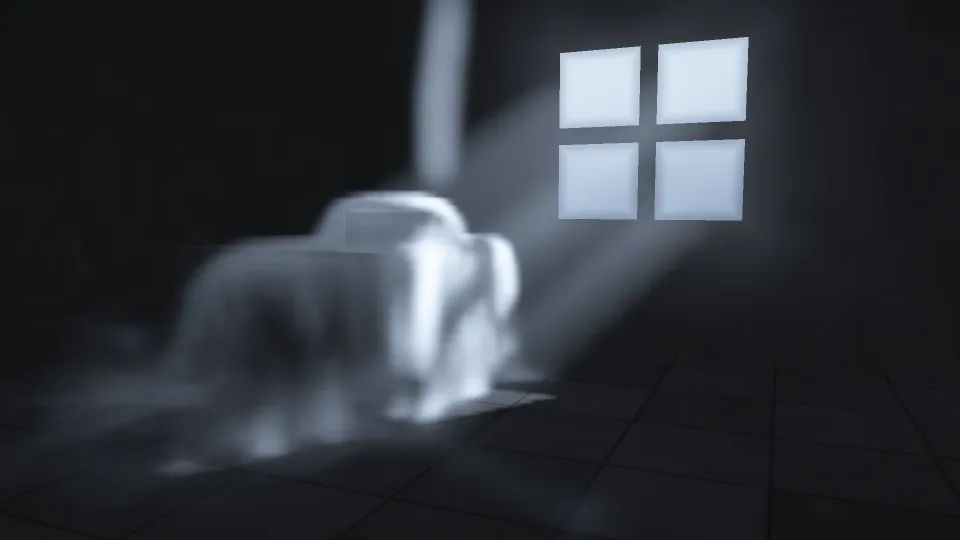
Cold mist from a quarter of a million GPU particles.
 Particles
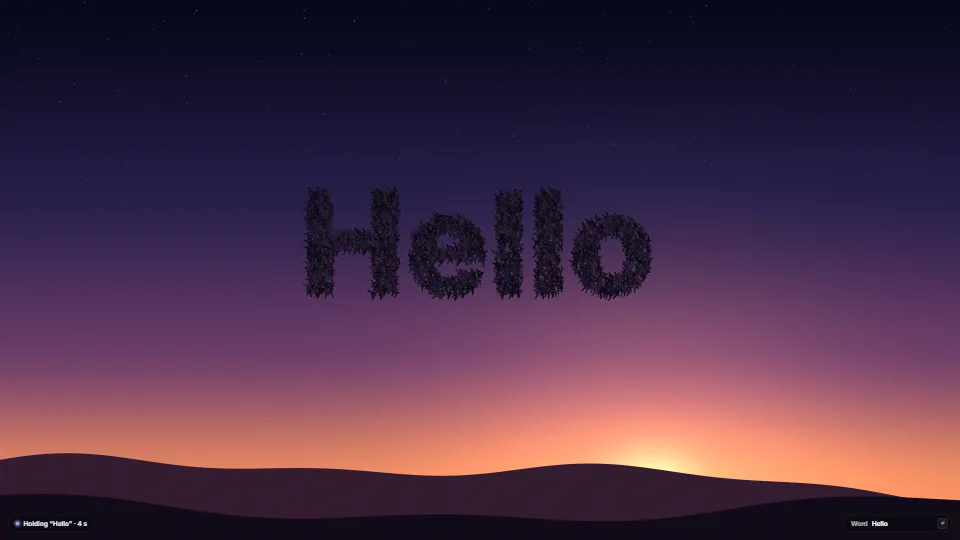
Birds, butterflies, fireflies, drones or darts that flock freely on the GPU, then each fly to their own point of a word or a shape, hold it and let go again.