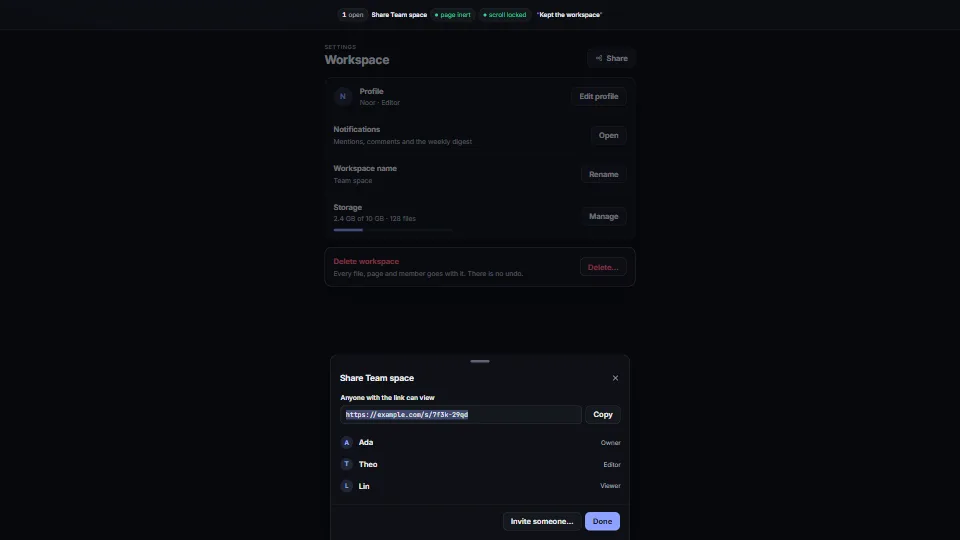
 UI & interactionNew
Accessible dialogs: modal, sheet, confirm
One small dialog core that does the whole job: a modal, side and bottom sheets you can drag away, and awaitable confirm() and prompt().
<0.01 CPU ms
Messages land in a margin beside the work, never on it.
Each unfolds from a mark on a spine, then folds to one line, so the margin is the history: filled is unread, hollow is read, a diamond is an error. A burst fuses into one counted mark, and every message keeps its own Undo.
Not measured yet.
install("toasts")Your coding agent reads its pitfalls and installs it through the library’s MCP server. Set it upWritten for the library. Fully custom code.
W3C WAI-ARIA Authoring Practices: An error announcement leaves focus where the operator is working.
UI & interactionNewOne small dialog core that does the whole job: a modal, side and bottom sheets you can drag away, and awaitable confirm() and prompt().
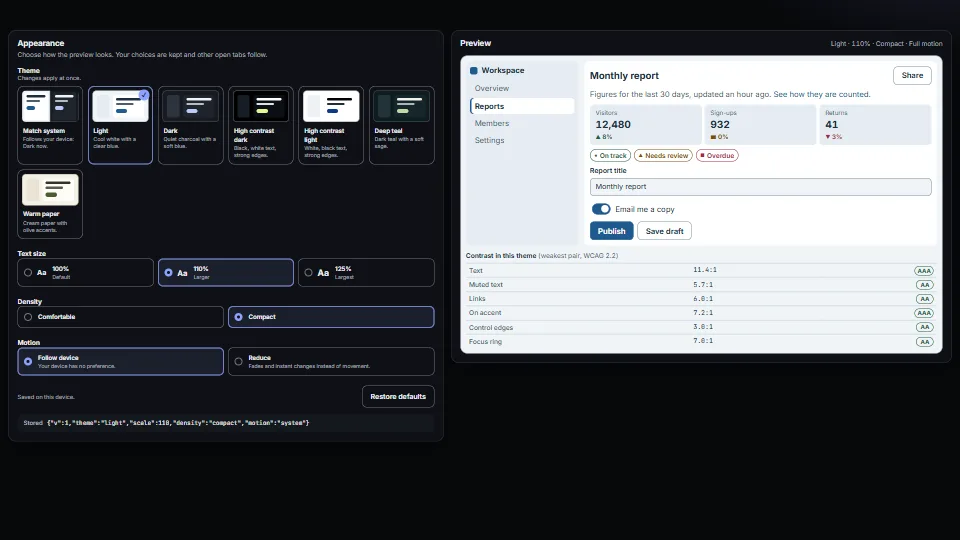 UI & interactionNew
A small appearance system: colour presets as CSS variables (light, dark, two high-contrast, two accent looks), a “Match system” choice that follows the…
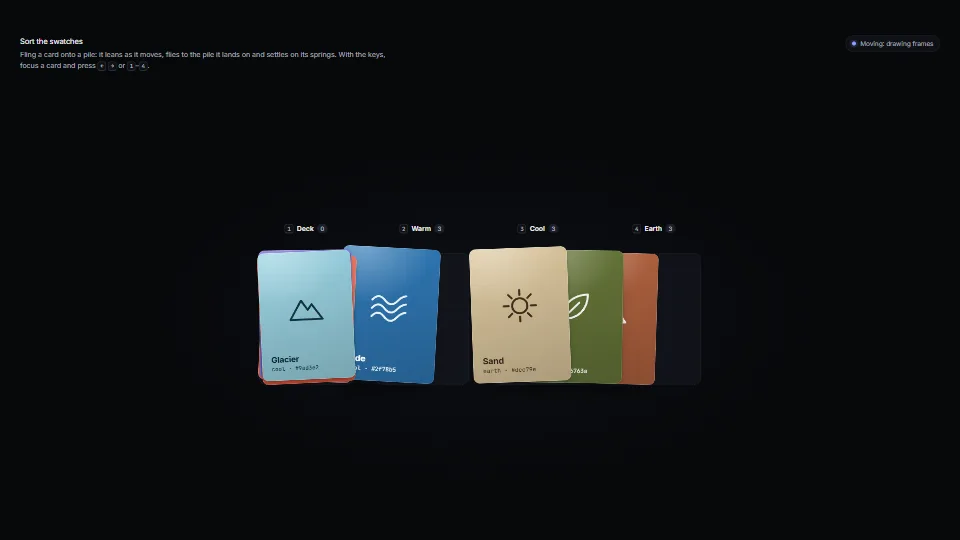 UI & interactionNew
Cards that feel like things: each sits on damped springs for its place, turn, squash, paper flutter and lift.